
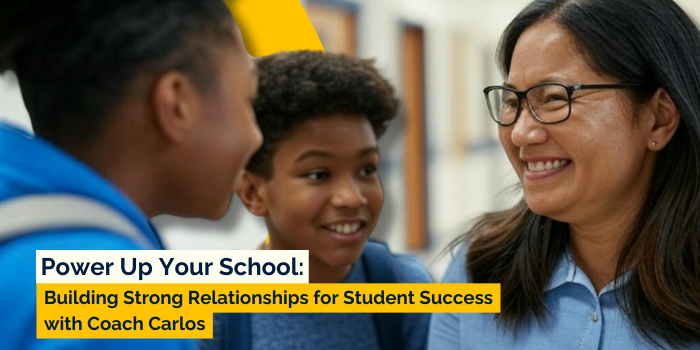
In our latest episode of the School Leadership Show, we had the pleasure of speaking with Coach Carlos Johnson, author of “Power Engage: Seven Power Moves for Building Strong Relationships to Increase Engagement with Students.” Coach Carlos shared his insights on transforming school culture by focusing on relationships, mindset, and engagement. Here’s a recap of the key takeaways from our conversation.
The Power of Relationships
Coach Carlos emphasizes that relationships are the key to transforming school culture and boosting student engagement. He believes that when students feel disconnected from their teachers, they may “leave the classroom emotionally and cognitively”. He advocates for building a culture of kindness and connection, noting that “just basic human kindness” is essential.
- Key Quote: “There’s something a kid can pick up from an adult like you don’t like me… And when a kid feels that, they vote with their heads, they vote with their behaviors”.
Shifting Mindsets: From Instructor to Coach
Coach Carlos stresses the importance of adopting a coach’s mindset rather than just being an instructor. This means assessing the unique strengths of each student and teacher and finding ways to bring out the best in them.
- Key Idea: A coach looks at their team and asks, “how do I get the best out of him?”
- Mindset Comparison:
- Culture-driven mindset: Connects with students who fit into the existing culture.
- Competence-driven mindset: Connects with students who are already doing well academically.
- Coach-driven mindset: Meets students where they are and believes in their potential to grow.
The “Performance-Based” Relationship
Coach Carlos introduces the concept of “performance-based” relationships. This means that teachers and students have a clear understanding of their roles and are accountable for their performance. It doesn’t mean that relationships aren’t caring; it simply means that everyone has a job to do and that expectations are clear.
- Key Concept: “The way you’re going to evaluate me is my performance. The way I’m going to evaluate you is your performance”.
- It’s not about being “besties,” but about respecting each other and fulfilling agreed-upon responsibilities.
Engaging Parents as Partners
Coach Carlos highlights that parent engagement is essential for student success and encourages schools to focus on engagement instead of just involvement.
- Involvement vs. Engagement: Involvement is getting parents to participate, while engagement means parents have “skin in the game”.
- Meaningful Minimums: Identify a few basic, achievable actions that parents can do to support their child’s education. For example, parents could sign into the school’s parent portal, sign homework logs, and keep their contact information updated.
- Key Insight: If 40% of your parent contact information is not updated, you do not have a performance based relationship.
Measuring What Matters: The Three Indicators
When assessing the culture of a school, Coach Carlos looks at three key indicators:
- Recruitment Data: What are people saying about your school? Are you attracting a consistent flow of students?
- Retention Data: Is there a high turnover of both students and teachers?
- Response to Quality Instruction: Are students engaged and thriving in the classroom?
Action Steps
Here are some actions you can take based on Coach Carlos’s insights:
- Go to the Streets: Talk to parents, both past and present, to understand what the community thinks about your school.
- Assess Teacher Relationships: Evaluate your teaching staff on their ability to connect with students, not just their content knowledge.
- Establish Meaningful Minimums: Involve parents by identifying simple, actionable ways they can be engaged in their child’s education.
- Encourage Healthy Competition: Have students compete against themselves to promote growth and celebrate improvement.
- Coach Mindset: Ask yourself how can I get the best out of each student.
The Power of a Promise
Coach Carlos shared that at the Male Leadership Academy, they signed a contract with families that stated if a student came to school on time every day and was willing to learn, they would achieve at least one year’s growth. This idea encapsulates the essence of a performance based relationship: if you uphold your end of the bargain (consistent presence and effort), we promise you will achieve growth.
Conclusion
Coach Carlos’s approach to school transformation is centered on building strong relationships, fostering a growth mindset, and empowering students and parents. By shifting from a traditional teaching approach to a coaching mindset and focusing on a performance based approach, schools can create a culture where all students have the opportunity to succeed.
What are your thoughts on building strong relationships in schools? Share your ideas and experiences in the comments below!
Want to Learn More? Visit carlosjohnson.org or imageofsuccess.com to explore Coach Carlos’s work further.